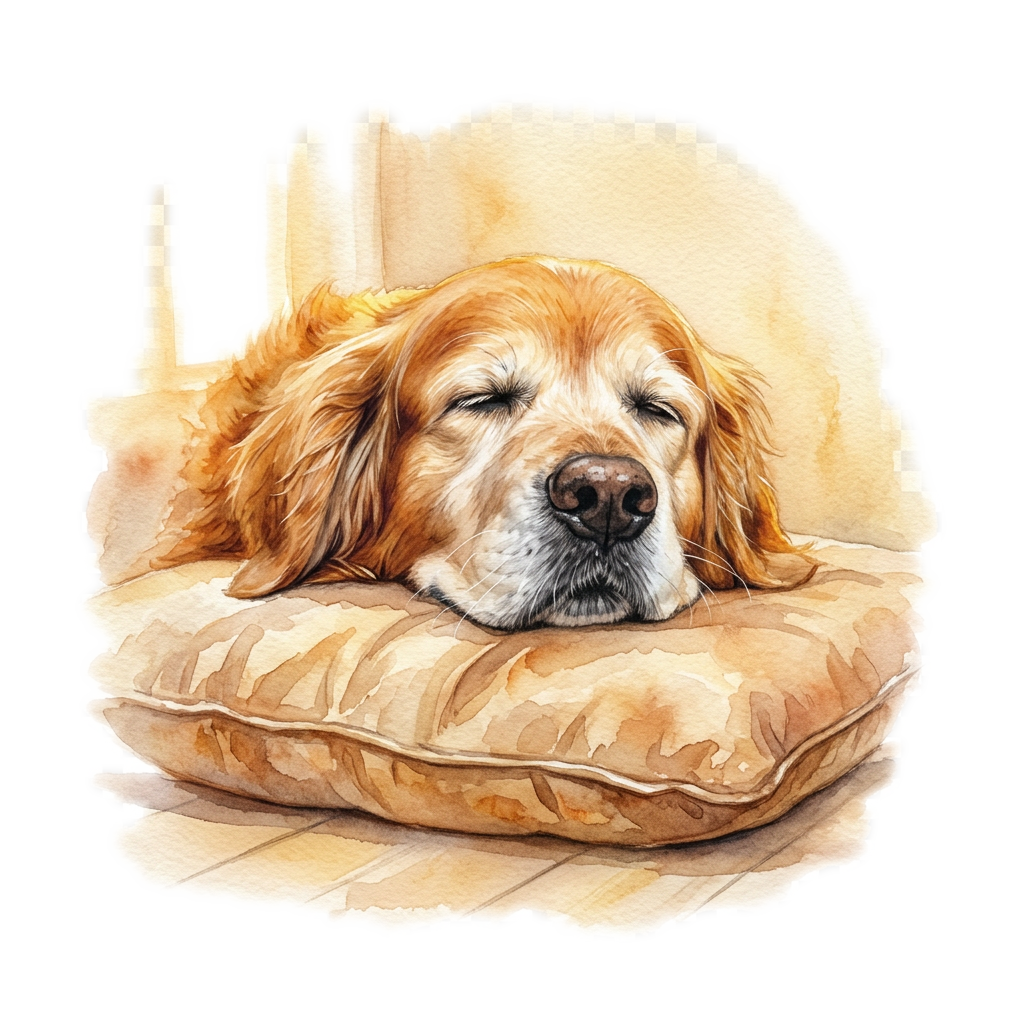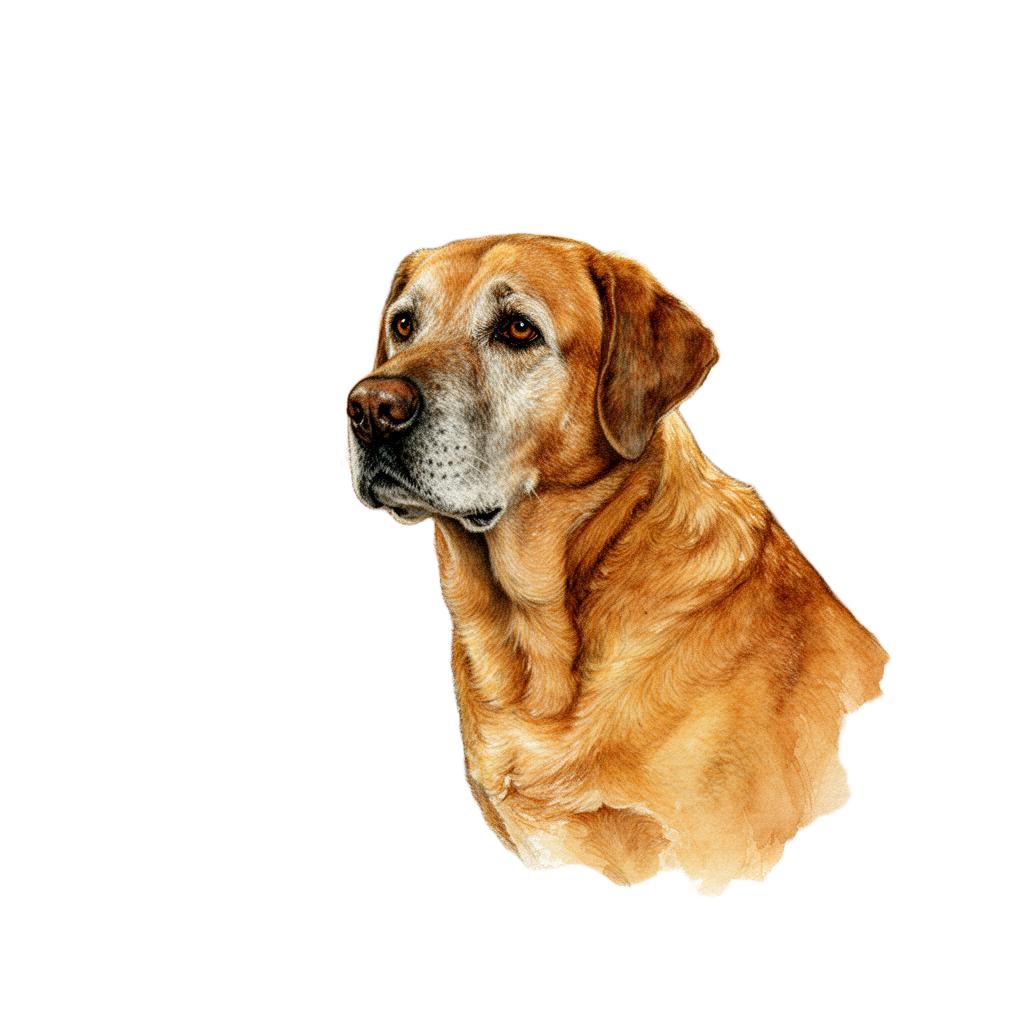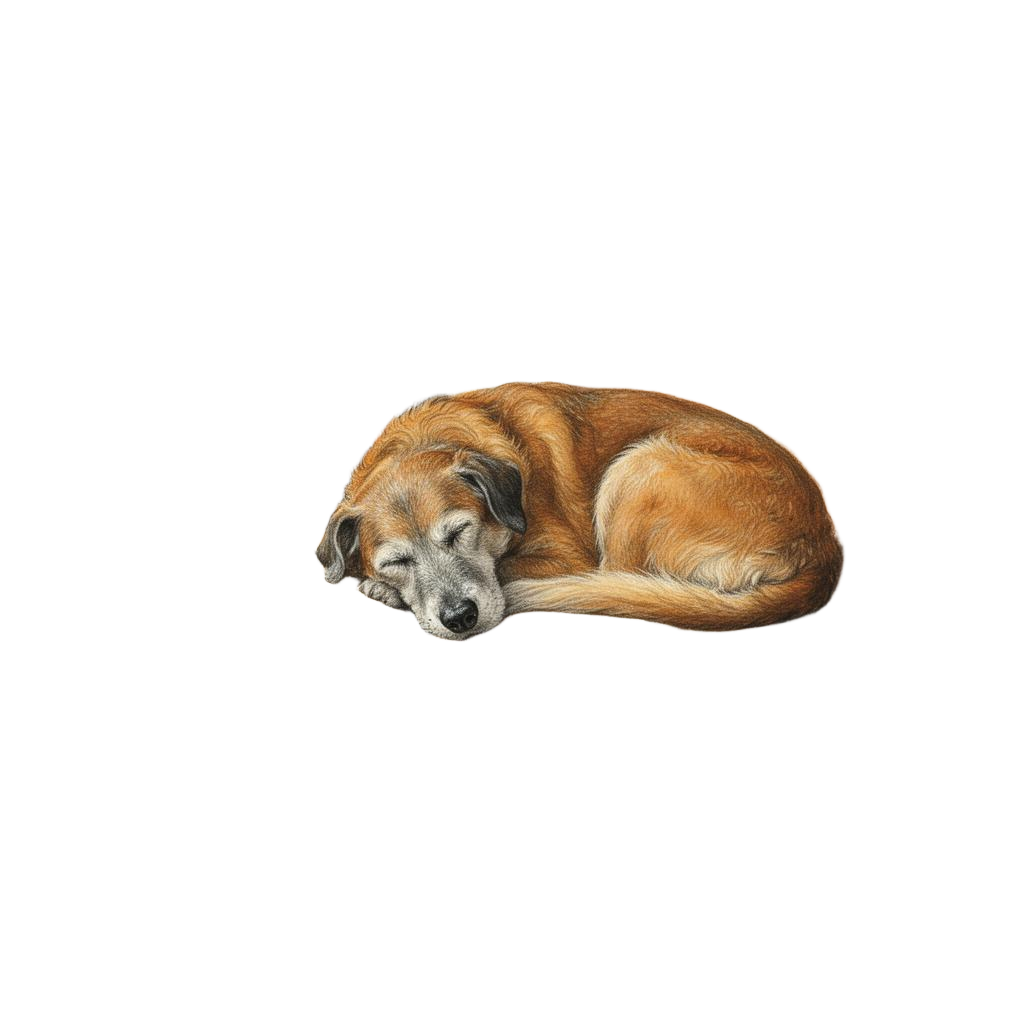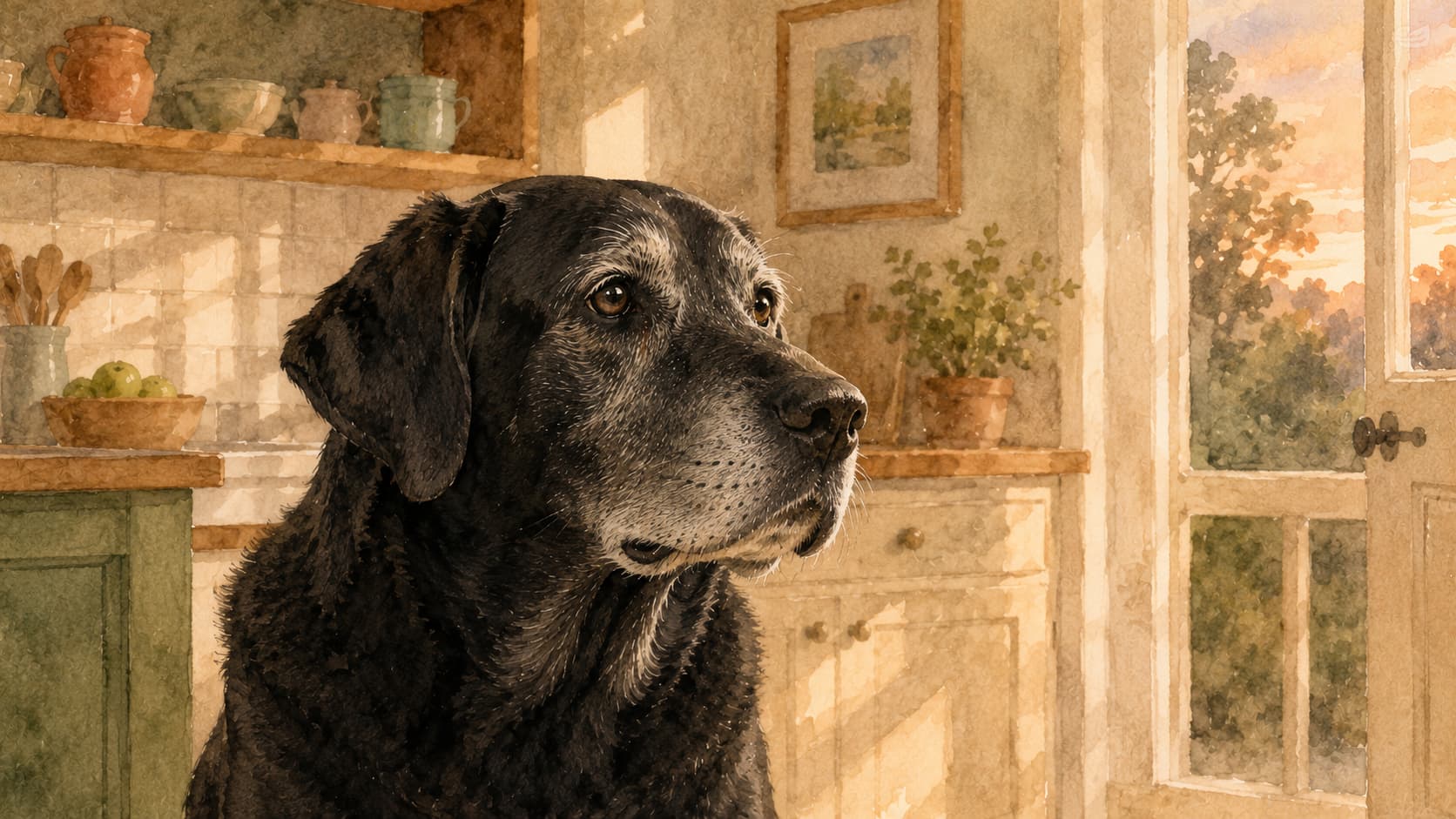
You're not imagining this. The pause at the doorway. The 3am pacing. The blank stare at the wall where the water bowl used to sit. Most owners we hear from describe a single specific moment — usually at night — when they finally typed the question into Google. By the time you're searching this, the answer is almost always: yes, you're seeing something. The work now is figuring out what kind of something, and what to do with it.
Yes, dogs can develop dementia. The clinical name is canine cognitive dysfunction (CCD), and up to 35% of dogs develop signs of it at some point in their life. Common signs include disorientation, indoor accidents, changes in sleep–wake patterns, slower social recognition, reduced activity, and increased anxiety. If you're recognising more than two of these in your dog, you're not imagining it — and you're catching it at the right time to act.
This guide walks through the eight signs most often present, how to tell them apart from normal aging, and a practical decision framework for what to do next. We don't recommend medications or specific products — those are vet decisions. We do give you the structure you need to walk into that vet conversation with something to work with.
How to tell if your dog is getting dementia
The honest answer: you can't make the diagnosis yourself, and you don't need to. What you can do is recognise the pattern, score what you're seeing across the six DISHAA domains vets use, and bring that data to your vet for confirmation.
The pattern that points most strongly at dementia (CCD):
- Gradual onset. Signs developed over weeks or months, not days. Sudden-onset disorientation is a different category — possibly stroke, vestibular event, or another acute condition — and warrants an urgent vet visit.
- Multiple signs across different areas. A dog with dementia typically shows two or more shifts (e.g. sleep changes + social withdrawal + occasional confusion), not just one.
- The dog is otherwise eating and walking normally. Major appetite changes or mobility decline suggest something else is happening in parallel.
- Age 7+. Dementia signs typically appear from age 7–9 in larger breeds, 9–11 in smaller breeds.
If that pattern fits, this guide will help you act on it. If it doesn't quite fit — especially if signs are sudden, paired with appetite or mobility changes, or your dog seems in pain — see your vet sooner rather than later.
The 8 signs of dog dementia (also called CCD)
These are the symptoms most often present in canine cognitive dysfunction. Owners describe them in roughly this order of "loudness" — quieter signs first, more obvious ones later.
1. Disorientation in familiar places. Standing in corners, behind furniture, or in odd spots — looking lost. Approaching the wrong side of a familiar door. Staring at walls or empty space for long stretches. Getting "stuck" in rooms the dog has used for years.
2. Indoor accidents in a house-trained dog. Peeing or pooping inside despite years of perfect house training, with no obvious medical explanation. Sometimes confused about which door is the outdoor door.
3. Waking and vocalising at night. Pacing, panting, whining, or barking between 1 AM and 5 AM more nights than not. The dog who used to sleep through the night now wakes repeatedly.
4. Slower or absent greeting at the door. The greeting that used to be enthusiastic is now quieter, slower, or sometimes missing entirely. The relationship feels slightly off, even if you can't always put your finger on why.
5. Decreased response to their own name. Slow or inconsistent response when you call them, when you know hearing isn't the cause. Not always — sometimes they respond fine — but inconsistently.
6. Reduced interest in things they used to love. Walks, play, food (sometimes), favourite spots in the garden, family members coming home. A drift through rooms instead of a movement through them.
7. Restlessness or agitation in the evening hours. This pattern has its own name — sundowning. Calm dog during the day becomes increasingly agitated from late afternoon onward. (Separate guide on sundowning.)
8. New fears or sensitivities. Sounds that didn't bother them before — storms, the doorbell, the vacuum. Reluctance with familiar parts of the routine. A water bowl in a new spot that visibly throws them off.
If you're recognising three or more of these, the pattern points at CCD. If you're recognising most of them, it's worth a focused vet conversation in the next few weeks.
How dog dementia is different from normal aging
Senior dogs slow down. They sleep more. They become a little less interested in the back garden. None of that is dementia — that's just being old.
Dementia is different because of intensity and pattern:
- Slower doesn't equal lost. A senior dog who walks slower is normal. A senior dog who pauses for 30 seconds at a familiar doorway is showing disorientation.
- Sleeping more is normal. Sleeping during the day and pacing all night is sleep–wake disruption — a DISHAA sign.
- Less interested in long walks is normal. No interest in food, name, or family is reduced activity — a DISHAA sign.
The line is roughly: "moves slower" is aging; "seems lost in his own kitchen" is dementia. You'll know the difference when you see it. Most owners do, even before they have a word for it.
Free 2-minute DISHAA assessment
See where your dog stands across the six dimensions vets use to track cognitive change. Enter your email — we'll send your assessment and a 3-night calm plan.
Free · 2 minutes · no account · unsubscribe anytime.
When to act vs when to wait
Three categories help most owners decide.
Wait and observe — if you're seeing only one or two of the eight signs, occasionally, and your dog is otherwise themselves. Score what you're seeing across the six DISHAA domains (our free 2-minute quiz does this), and re-score in a month. If the pattern is stable, you have time.
Act this week — if you're seeing three or more signs, recurring, with a clear pattern that's been present for more than a month. Start the home work tonight (lower lighting from 4 PM, consistent feeding window, predictable evening routine), take the DISHAA quiz to score what you're seeing, and book a vet visit in the next 2–3 weeks. Bring three weeks of observation notes when you go.
Call your vet today — if any of these are happening: head pressing against walls or furniture, sudden onset of severe disorientation, head tilt, balance loss, refusing food for more than 24 hours, vocalising that sounds distressed rather than restless, or visible pain. These are different conditions, not dementia, and they need urgent attention.
Most owners we hear from sit in the middle category. The vet visit isn't urgent, but it shouldn't wait six months either. The 2–3 week window gives you time to gather useful observation data.
What to do if you suspect dementia
Three steps, in order.
Step 1: Take the free DISHAA quiz tonight. Twelve questions, two minutes, no account needed. It scores cognitive change across all six domains the vet's framework covers, and gives you a baseline number you can re-take monthly. This is the single most useful first thing you can do.
Step 2: Start the home work this week. Three changes that pay the biggest dividend at this stage: a predictable evening routine (lights down by 8 PM, same walk loop, calm proximity at settling time), an earlier feeding window (by 5:30–6 PM if possible), and a simplified home environment (no rearranged furniture, nightlights in halls). These work whether or not your dog has CCD — and they're free.
Step 3: Book a vet appointment in the next 2–3 weeks. Don't go in with a question. Go in with data — three weeks of observations, your DISHAA score, a short list of specific incidents. Your vet will want to rule out conditions that mimic CCD (pain, hearing loss, vision changes, metabolic issues) before settling on a diagnosis. That's appropriate.
The Hearthside Method is the structured eight-week version of the home work. It's the at-home care system that runs alongside whatever your vet recommends — daily routines, evening rituals, sleep support, mobility-aware mornings, cognitive engagement, and weekly observation. Most owners we hear from describe it as the part of senior care nobody handed them. You can also start the home work tonight without it — the recommendations above are the same ones the Method opens with.
The honest part
You're not overreacting by being here. By the time most owners search "is my old dog getting dementia," the dog has been showing the pattern for months. Coming here is the moment of paying attention — which is the most useful thing you can do at this stage.
You probably can't reverse what's happening. What you can do is shape the months ahead. Owners who catch it early, structure the home environment, and have a steady vet relationship describe a longer, calmer chapter than the panic-version of these months tends to be.
Start with the quiz. Take it tonight. Re-take it in a month. The structure will reveal itself in the comparison.
The dog you've loved your whole life is still in there.
Frequently asked questions
Common questions dog owners ask about this. We answer plainly and stay in our lane.
Can dogs get dementia?+
Yes. The clinical name is canine cognitive dysfunction (CCD), and up to 35% of dogs develop signs of it at some point in their life. It's similar to Alzheimer's disease in humans — a gradual, age-related decline in brain function affecting memory, attention, sleep, social recognition, and behaviour.
What are the first signs of dementia in old dogs?+
The earliest signs are usually quiet, not dramatic. A brief pause at a familiar doorway. Slightly slower response to their name. Standing in a corner for a moment before turning around. Most owners notice the louder signs first — pacing, indoor accidents, 3am wake-ups — and only afterward realise the quieter ones had been happening for months.
How do I know if my dog has dementia or is just getting old?+
The line is intensity and pattern. Slower walking is aging; freezing for 30 seconds at a familiar doorway is dementia. More daytime sleep is aging; pacing all night is sleep–wake disruption (a dementia sign). The pattern that points at dementia: gradual onset, multiple signs across different areas, dog otherwise eating and walking normally, age 7+.
What age do dogs typically get dementia?+
First signs usually appear between 7 and 9 years in larger breeds, 9 and 11 in smaller breeds. Prevalence rises sharply with age — research from the Dog Aging Project (Nature, 2022) shows the rate roughly doubles for every additional year past 10. By 15–16 years, more than two-thirds of dogs show measurable cognitive change.
Should I take my dog to the vet for dementia?+
Yes — but you don't need to rush. Most cases warrant a focused vet appointment within 2–3 weeks of suspecting it, with three weeks of observation notes and a DISHAA score in hand. Exception: any head pressing against walls, sudden severe disorientation, balance loss, or distressed vocalising warrants an urgent visit, because those signal different conditions entirely.
Can dementia in dogs be treated?+
Progression can't be reversed, but the rate of decline and day-to-day quality of life are both responsive to intervention. Your vet has options — medications, dietary approaches, supplements with research behind them. We don't recommend specific products because those decisions depend on your dog's full medical context. The at-home work (predictable routines, calming evening rituals, sleep support, cognitive engagement) runs alongside whatever your vet recommends — and most senior dogs benefit most when both sides are active at the same time.
Sources
Authoritative references underlying this guide. Linked for verification.
- Cognitive Dysfunction SyndromeCornell University Riney Canine Health Center
- Evaluation of cognitive function in the Dog Aging Project (n=15,019)Nature Scientific Reports, 2022
- Managing Cognitive Dysfunction and Behavioral Anxiety (2023 Senior Care Guidelines)American Animal Hospital Association
- CCDS Working Group: Guidelines for diagnosis and monitoring (2026)Journal of the American Veterinary Medical Association
Tom writes Hearthside's long-form guides on senior dog cognitive change and home-care frameworks. He's spent years living alongside aging dogs, and that perspective shapes every guide — alongside the veterinary research we cite.
Free 2-minute DISHAA assessment
See where your dog stands across the six dimensions vets use to track cognitive change. Enter your email — we'll send your assessment and a 3-night calm plan.
Free · 2 minutes · no account · unsubscribe anytime.
The 8-week Hearthside Method
A structured plan for the dog you've loved your whole life.
Discover the Method