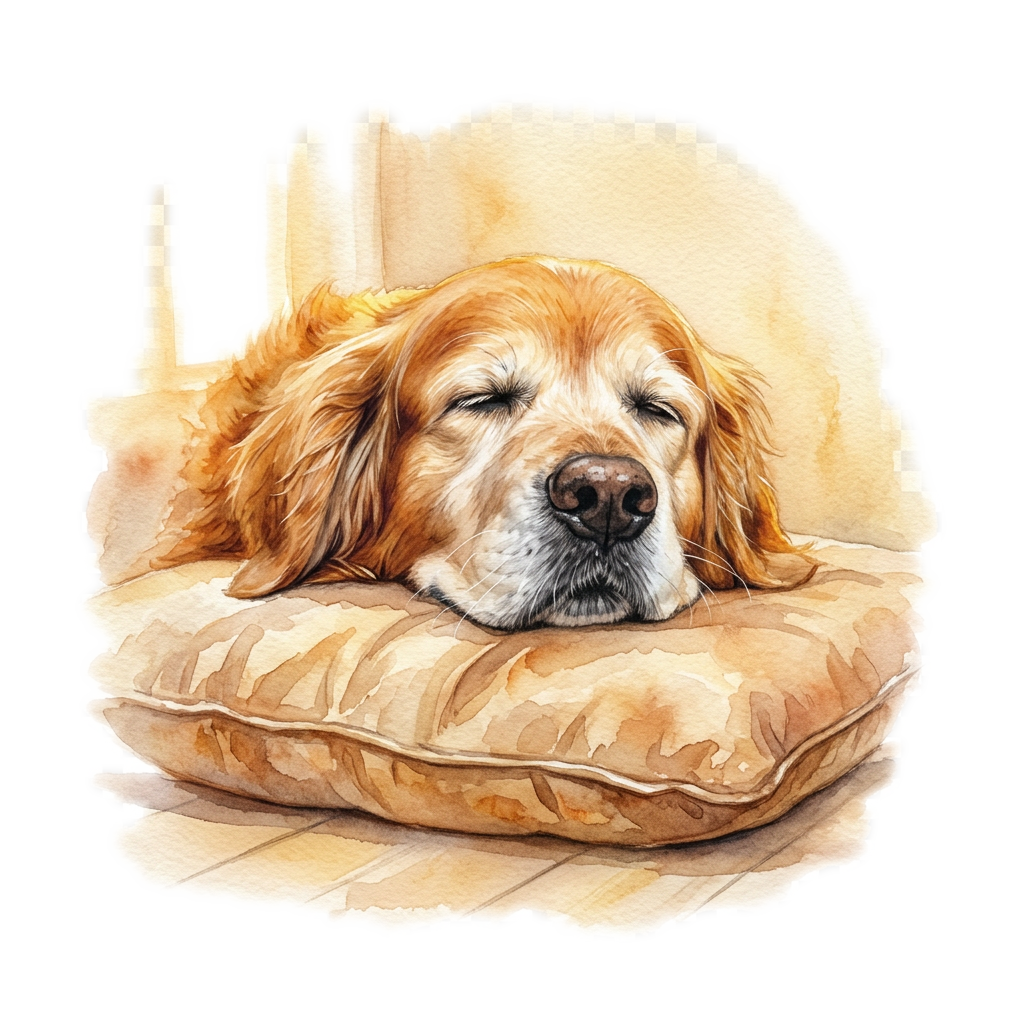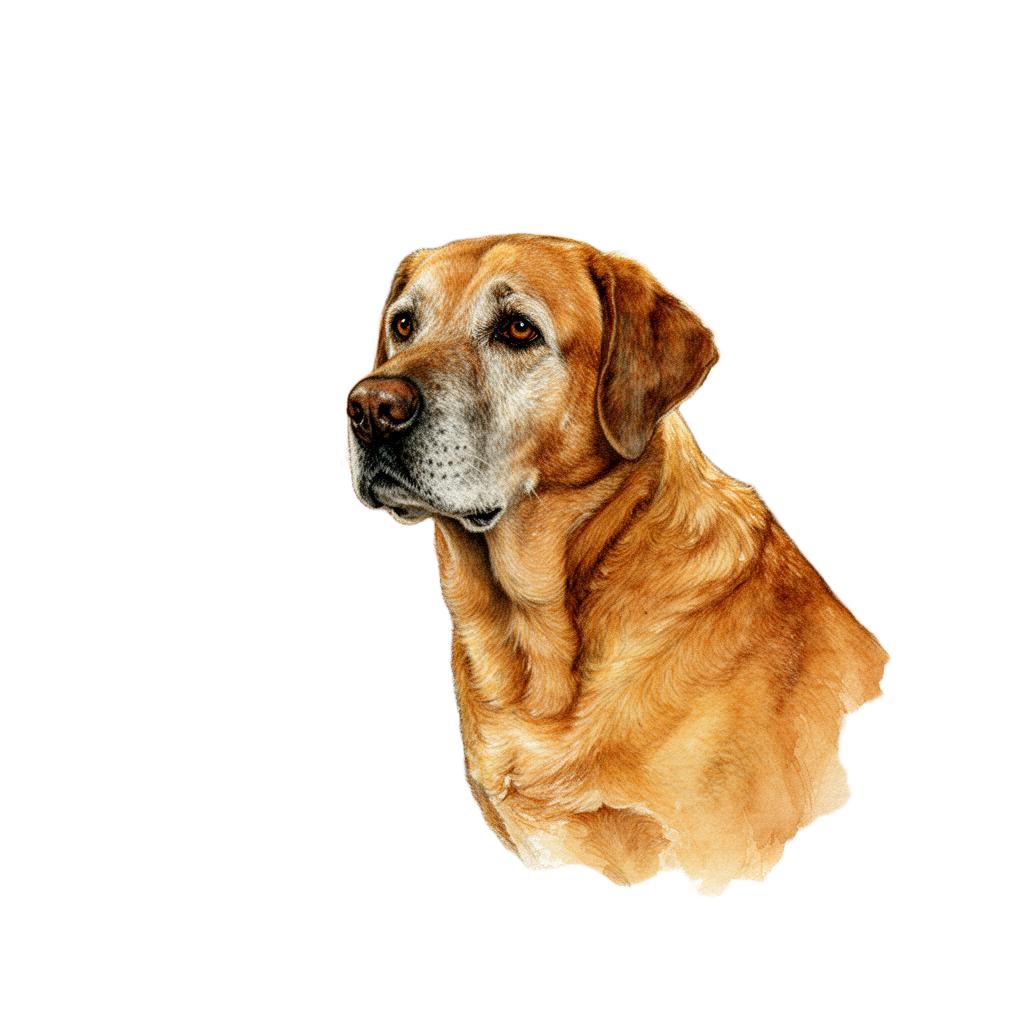
There's a moment with most senior dogs when the question stops being abstract. You catch yourself watching them get up from the floor and you wonder, for the first time honestly, how they're doing — really, not in the small-talk-with-the-vet way. That moment can feel disorienting. It deserves a framework, not a gut decision made on a hard Tuesday night.
A dog's quality of life is best assessed as a pattern across weeks, not a single moment, scored across five dimensions: mobility, appetite and hydration, hygiene, mental engagement, and moments of real joy. The widely-used clinical framework is the HHHHHMM scale developed by Dr. Alice Villalobos (Hurt, Hunger, Hydration, Hygiene, Happiness, Mobility, and More good days than bad). Direction over weeks matters more than any single score.
This guide walks you through how to assess your senior dog's quality of life with structure. It's the framework most veterinarians use behind the scenes, made usable at home. We won't make recommendations about end-of-life decisions — those are deeply personal and stay with you and your vet. We will give you the structure that makes that conversation, whenever it comes, feel less arbitrary.
What "quality of life" actually means for an aging dog
Quality of life is not whether your dog is happy today. It is not whether they ate breakfast. It is not the question of a single afternoon when they seem more themselves than they did yesterday.
Quality of life is a pattern across weeks and months. Some weeks are good. Some are hard. What matters is the direction over time, and whether the proportion of comfortable hours to uncomfortable ones is moving the right way, the wrong way, or holding steady.
The reason this matters: most dog owners we hear from describe a moment of acute worry — a bad night, a fall, a refusal of dinner — and that single incident colours their entire read of how their dog is doing. Without a framework, that incident becomes the assessment. With a framework, that incident becomes one data point in a longer trend, and the longer trend almost always reads differently from any single moment.
Structure protects you from making decisions in the wrong week.
The five dimensions worth tracking weekly
Most quality-of-life frameworks converge on a similar set of dimensions. Score each on a 1–10 scale once a week, in a notebook only you see.
Mobility. Can your dog get up from lying down without significant struggle? Can they navigate stairs? Can they walk for some duration without obvious distress? Stiffness is normal in senior dogs; an inability to move comfortably is different.
Appetite and hydration. Are they eating their meals? Drinking water on their own? Maintaining body weight? Occasional skipped meals happen in any senior dog. A consistent drop is different.
Hygiene. Can they keep themselves clean? Are they having frequent indoor accidents that go beyond CCD-related occasional incidents? Are they able to walk to relieve themselves outside? Hygiene is often the dimension owners under-score — it's emotionally complicated to evaluate honestly.
Mental engagement. Do they still respond to the things they used to enjoy — your return home, a familiar voice, the leash, a favourite spot in the garden? Engagement is a real signal of internal well-being. A senior dog who's still interested in the things they love is in a different place than one who's drifted past them.
Joy moments. Real ones, not wishful ones. Did you see a moment of genuine pleasure this week — a tail wag at recognition, a few minutes of interest in something, a settled sigh when leaning against you? Be honest with yourself. Wishful joy is harder to read than real joy, but you'll know the difference once you start looking.
A weekly total of 35–50 (out of 50) means most dimensions are still working. 20–34 means a meaningful slide is underway. Below 20 means the conversation should be active and frequent with your veterinarian. These ranges are rough guides, not thresholds — the direction over weeks matters far more than any individual reading.
The Villalobos HHHHHMM scale
If you want a more clinical framework, the HHHHHMM scale developed by Dr. Alice Villalobos (a veterinary oncologist known for her hospice work) is one of the most widely used quality-of-life tools in veterinary medicine. The letters stand for: Hurt, Hunger, Hydration, Hygiene, Happiness, Mobility, and More good days than bad.
Each dimension is scored 0–10, with 10 being ideal. A total above 35 is generally considered acceptable quality of life. Below that, the conversation with your vet about comfort, supportive care, and end-of-life options becomes more central.
The HHHHHMM scale has overlap with our five dimensions above — Villalobos splits hunger and hydration into two scores, separates hurt (pain) as its own dimension, and adds the "more good days than bad" reflection as its own data point. Use either framework. The point is having one.
Want a structured place to track this weekly? The Hearthside Method includes a printable quality-of-life weekly check-in alongside the DISHAA observation worksheets. Most owners use it long past the eight weeks of the framework itself. See inside the Method →
Why direction over weeks matters more than any single score
Here's the part most quality-of-life articles skip.
A score of 32 in one week is interpreted very differently depending on what came before. If your dog scored 45 a month ago and 38 the week before and 32 today, that's a clear downward trend over four weeks — a real signal. If your dog scored 30 two months ago, 28, then 32 this week, that's a slow climb back. Same week. Same number. Different meaning.
This is also why writing things down matters so much. Your memory of how the last three months went is shaped by recent events, by emotional weeks, by your own state. The notebook is honest in a way memory often isn't.
Three patterns are worth watching for specifically:
A slow steady decline over six to eight weeks, where the score drops two or three points each fortnight. This is the most common trajectory in advanced senior dogs and it's the one that most often surprises owners — because individually each week feels survivable, but the cumulative slide is real.
A sudden drop of five or more points in a single week, especially in mobility or appetite. This is usually the signal of an acute issue — pain flare-up, infection, illness, sometimes a medication response. Worth a vet call.
A plateau with small fluctuations. Many senior dogs sit in this pattern for months, sometimes years. The plateau isn't a problem in itself; the length of comfortable plateau is what most owners describe wanting most.
Free 2-minute DISHAA assessment
See where your dog stands across the six dimensions vets use to track cognitive change. Enter your email — we'll send your assessment and a 3-night calm plan.
Free · 2 minutes · no account · unsubscribe anytime.
When the conversation gets harder
At some point, with most senior dogs, quality-of-life scores trend downward enough that conversations about comfort, palliative care, and end-of-life decisions become part of the picture.
We are not going to give you a number that says "now." There isn't one. Those decisions sit with you and your vet, and they're influenced by your dog's specific conditions, what's still working, what's clearly difficult, and the values you bring to this part of the relationship.
What we can tell you:
The framework above makes the conversation with your vet specific. Walking in with twelve weeks of weekly scores in a notebook, with the dimension breakdown, with notes about what was happening on the harder weeks — that conversation is different from "she just seems off lately." Your vet has something to work with. You have something to anchor your own thinking to.
Most veterinarians who work with senior dogs say the same thing in slightly different words: the families who do best in this chapter are the ones who've been honest with themselves for weeks before the harder questions come up. Not the ones who waited until the harder questions forced themselves into the room.
What "good days outnumber bad days" actually looks like
The "more good days than bad" criterion is often cited as the simplest quality-of-life heuristic. It's also one of the easiest to misread.
A "good day" is not a perfect day. A good day for a senior dog with CCD or significant arthritis might still include some stiffness, some confusion, some moments of restlessness. What makes it a good day is that the predominant texture of the day is comfort, recognition, engagement, and at least one moment of genuine pleasure.
A bad day is one where comfort is mostly absent, where the dog is mostly disconnected, where pain or distress is the dominant note across the hours.
Tracking this is simpler than the five-dimension score. Each evening, mark the day as good, mixed, or bad. After two weeks, count. If the ratio is shifting toward bad weeks at a time, that's information. If it's holding around three good for every one bad, that's a different picture.
This is the kind of data that doesn't exist if you don't write it down. Memory averages out. The notebook doesn't.
How to use this with your vet
Three concrete inputs make a quality-of-life vet conversation move forward:
- Your most recent weekly score, with the breakdown by dimension
- The trajectory over the last four to eight weeks — are scores climbing, stable, or falling?
- The current pain picture — your vet's assessment matters here especially, because pain is the most common driver of quality-of-life decline and also the most addressable
Your vet has options. Comfort medications. Mobility support. Anti-inflammatory protocols. Anxiolytics where appropriate. Quality-of-life decline doesn't equal a single endpoint — there's often a category of supportive care that extends comfortable months. We don't recommend specific protocols because those are vet decisions. But we can tell you the options exist, and that quality-of-life tracking is exactly how you give your vet the data they need to work with them.
What you can do at home, structurally
Quality of life is not a passive measurement. It's also responsive to what you do day to day.
The structured at-home work that protects quality of life longest tends to be the same set of things: a predictable daily routine, calming evening rituals, mobility-aware mornings, environment that's been simplified for an aging brain, consistent observation, and small acts of comfort that compound.
The full eight-week version of that work is the Hearthside Method. It includes the weekly quality-of-life check-in as one of its tools — most owners report still using it long after the eight structured weeks end. If your dog is in the moderate-to-significant range on quality of life, this is the kind of structural support that runs alongside whatever your vet recommends.
You can also start the home work tonight without anything. Dim the lights at 8pm. Walk the same route. Sit nearby. Note one moment of comfort, one moment of difficulty. Three weeks of notes will tell you more about your dog's quality of life than three months of trying to remember.
This chapter is hard. The framework doesn't make it easier — but it does make it less arbitrary. When you eventually have the harder conversation with your vet, you'll walk in with data, and you'll walk out with a clearer path forward, whatever it is.
Frequently asked questions
Common questions dog owners ask about this. We answer plainly and stay in our lane.
How do I assess my dog's quality of life?+
Use a structured weekly score across five dimensions: mobility, appetite/hydration, hygiene, mental engagement, and real moments of joy. Score each 1–10 in a notebook only you see. After three to four weekly readings, the *trend* becomes visible — that direction tells you more than any single week's score.
What is the Villalobos HHHHHMM quality-of-life scale?+
It's a clinical framework developed by Dr. Alice Villalobos: Hurt, Hunger, Hydration, Hygiene, Happiness, Mobility, and More good days than bad. Each scored 0–10. A total above 35 is generally considered acceptable quality of life. Widely used in veterinary hospice work.
How do I know when it's time to put my dog down?+
We don't give you a number that says now — that decision sits with you and your veterinarian, informed by your dog's specific conditions, what's still working, and what's clearly difficult. What we recommend: weekly quality-of-life scores for at least six to eight weeks, an honest weekly good/mixed/bad day count, and a specific vet conversation built around that data. The structure won't make the decision easier, but it will make it less arbitrary.
What does 'more good days than bad' actually mean for a senior dog?+
A good day doesn't mean a perfect day. A good day for a senior dog might still include some stiffness, some confusion, some restless moments — but the predominant texture is comfort, recognition, engagement, and at least one moment of real pleasure. A bad day is one where comfort is mostly absent. Tracking the good/mixed/bad pattern over two weeks gives you a clearer read than any individual day.
Should I trust how my dog looks on any single day?+
No — and that's not a flaw in your judgement, it's how human memory works. We over-weight recent events and emotional weeks. The notebook is honest in a way memory isn't. A bad Tuesday night doesn't mean the month is bad. A good Sunday afternoon doesn't mean things have turned. The pattern across weeks is the real signal.
What can my vet actually do as my dog's quality of life declines?+
More than most owners realise. Comfort medications, mobility support, anti-inflammatory protocols, anxiolytics where appropriate — the category of supportive care that extends comfortable months is real and underused. We don't recommend specific protocols because those are vet decisions. But quality-of-life tracking is exactly how you give your vet the data they need to work with the options that exist.
Sources
Authoritative references underlying this guide. Linked for verification.
- Quality of Life Scale (HHHHHMM) — Dr. Alice VillalobosAmerican Animal Hospital Association
- Cognitive Dysfunction SyndromeCornell University Riney Canine Health Center
- Tips for Managing Senior Pet Quality of LifeLap of Love Veterinary Hospice







Tom writes Hearthside's long-form guides on senior dog cognitive change and home-care frameworks. He's spent years living alongside aging dogs, and that perspective shapes every guide — alongside the veterinary research we cite.
Free 2-minute DISHAA assessment
See where your dog stands across the six dimensions vets use to track cognitive change. Enter your email — we'll send your assessment and a 3-night calm plan.
Free · 2 minutes · no account · unsubscribe anytime.
The 8-week Hearthside Method
A structured plan for the dog you've loved your whole life.
Discover the Method